How Heat Pumps Work
A heat pump is a source of energy that is used mainly for heating family and residential houses, commercial buildings, industrial buildings, and so on. In addition to heating, this energy is also used for heating hot water or cooling the building. The heat pump therefore fully replaces the electric or gas boiler. The energy is obtained without any negative environmental impact: the heat pump is classified as a renewable energy source.
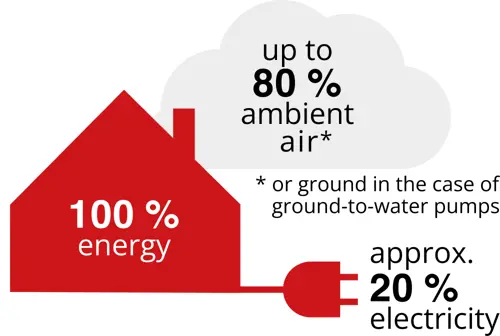
Compared to an electric or gas boiler, a heat pump is significantly more efficient because it also provides heat for your home from the surrounding environment: air, ground or water. The electric power of the heat pump only accounts for about 20-30% of the heat energy collected.
What is the purpose of a heat pump?
A heat pump provides heat for the home, both forheating and hot water. It fully replaces a traditional electric or gas boiler. It provides energy without any negative impact on the environment: the heat pump is a renewable energy source.
Where does its high efficiency come from?
Compared to an electric or gas boiler, a heat pump is significantly more efficient because it also provides heat for your home from the surrounding environment: air, ground or water. The electric power of the heat pump only accounts for about 20-30% of the heat energy collected.
This is what yields key energy savings compared to those of a conventional electric or gas boiler. The efficient use of freely available energy from the environment multiplies the heating efficiency by up to 5.5 times (SCOP = 5.5) compared to an electric boiler. And your heating bills can be up to 80% lower.
What is the seasonal SCOP heating factor?
The heating capacity of a heat pump is much higher than the electric power input of a compressor, i.e. theefficiency of the pump is many times higher than 100%. The ratio of the heating power and the compressor inputis called the COP.
The seasonal SCOP is the ratio of the total amount of heat produced to the total electricity consumption of the heat pump for the entire heating season. Depending on the kind and type of pump, it can reach values of 3.5 to 5.5.

Eligible for UK Government Grants
Master Therm heat pumps have all certifications and accreditations for Government support.

Heating and Cooling
During the summer months our heat pumps can provide long-term cooling of the building significantly increasing comfort.
A Deep Dive into Innovation and Excellence, manufacturing Heat Pumps since 1994
All technical development and production of MasterTherm heat pumps is carried out in the Czech Republic, EU. Custom made Heat Pumps bespoke for your project.
Air to water heat pumps
How they work
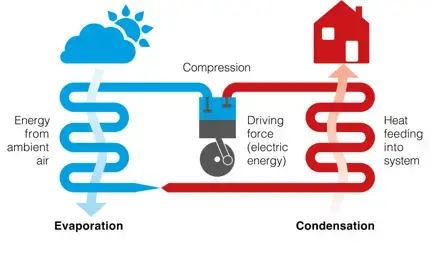
Air Source Heat Pumps (ASHP) are based on the principle of extracting heat from the ambient air, the temperature of which can be many degrees Celsius below zero. The heat extracted from the environment is transferred by the heat pump to the heating water that heats the building or is used in the preparation of hot water. The system achieves seasonal efficiencies of up to 4.5 times higher than those of a conventional electric boiler and thus delivers significant energy savings.
Main Advantages
The major advantages of air-to-water pumps include relatively low investment costs, quick and easy installation and the easy availability of a primary energy source: air is everywhere around us.
Ground to water heat pumps
How they work
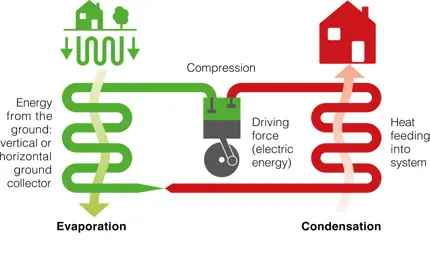
Ground Source Heat Pumps (GSHP) extract energy from the ground by means of a vertical or horizontal collector**. Antifreeze circulates through the collector and removes ground heat. Thanks to the constant temperature of the ground, the heat pump has a stable source of energy throughout the year. The heat extracted from the ground is then transferred to the building. The system achieves a seasonal efficiency up to 5.5 times higher thanthat of a conventional electric boiler.
Main Advantages
The ground-to-water system offers stable heating performance throughout the year and generally higher efficiency than air-to-water systems. The ground collector with a predicted lifetime of up to 100 years is an enduring investment in your building(s) and/or land(s).